
August 26, 2026 · Data for Lawyers
Cell phone records can take days to weeks after a request is sent. The timeline depends on the carrier, record type, legal process, and whether the data is still retained.
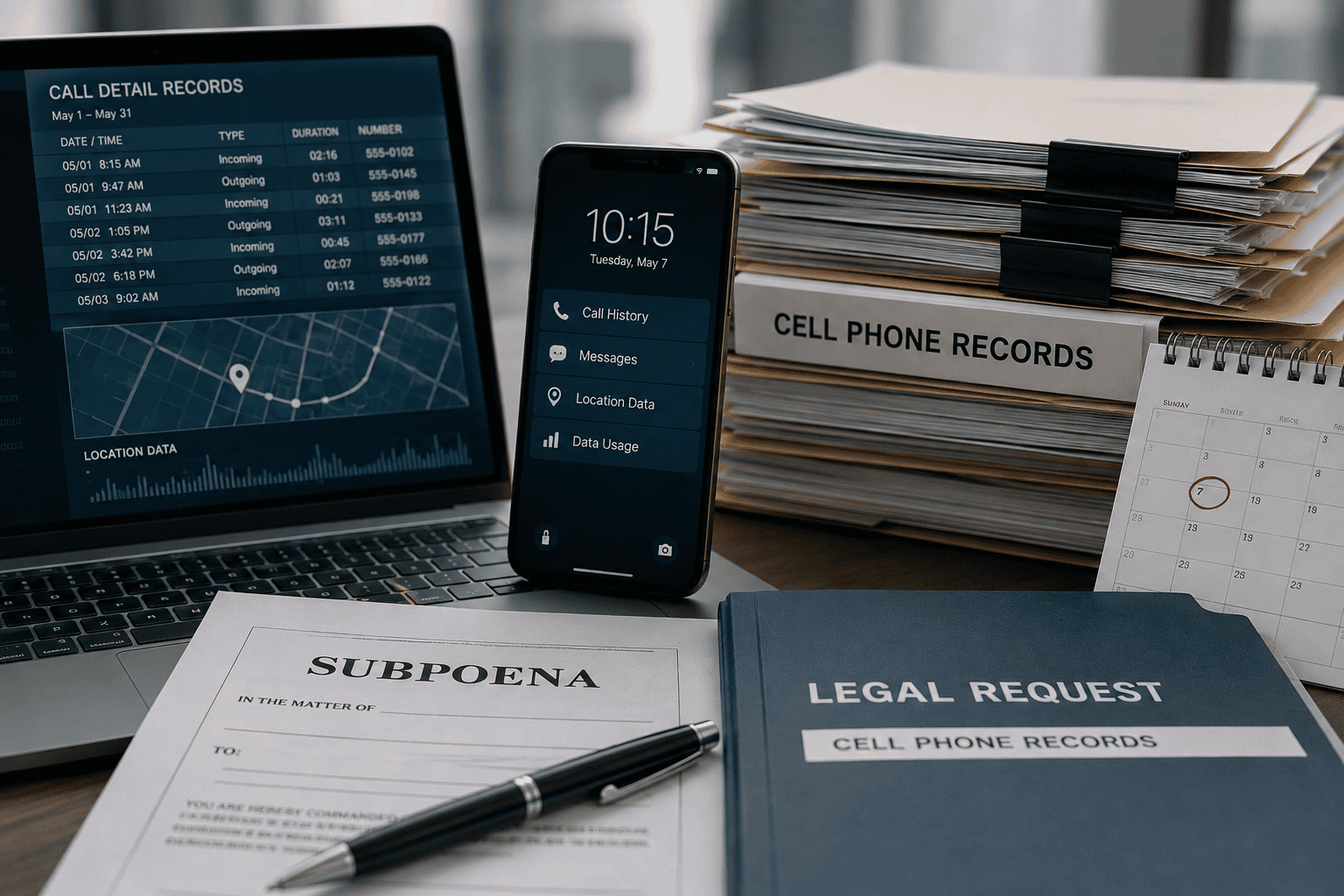
Cell phone records are frequently sought in various types of legal cases, ranging from civil litigation such as motor vehicle accidents to criminal investigations like murder, to even family law matters including revisions to alimony arrangements. Cell phone records contain valuable information, including data indicating whether or not the phone was in usage at the time of an incident, communication histories between relevant parties, or location data to help pinpoint someone’s whereabouts in relation to an incident. Once an attorney decides that cell phone records are necessary evidence in a case, how long does it take to obtain them? This can depend on several factors, including the time elapsed from the requested timeframe, the cellular carrier, the legal process used, and what type of records were requested.
General Timeline
Once any required waiting period has concluded and the request has been sent to the carrier, phone records may be returned within several days to several weeks. There is no official turnaround time due to the various factors mentioned above, as a carrier’s review of the records will take more time if the request was broad or requires more detail. A carrier may also reject a request if it asks for details that the company does not possess or no longer retains, if it fails to meet state or federal template standards, or if the attorney failed to use the correct legal process. This will lead to unfortunate delays in the process.
The Type of Records
When a request is submitted to the carrier, it should include specifics on what exactly the attorney is seeking. Some records are more straightforward, such as those including basic subscriber information and certain billing or calling records. Other, more sensitive information may require a different legal approach and take longer to receive a response to — such as cell-site location information. Identifying exactly what information is needed prior to forming the request is essential.
Record Retention Issues
Perhaps the most important consideration when seeking cell phone records is the timing — how long ago was the relevant timeframe, and what are the carrier’s retention policies? Wireless providers do not indefinitely retain data, and retention policies vary between carriers and also depending on the category of information. If the carrier receives a request and the responsive records are no longer available, the request will be rejected. It is essential for an attorney to understand record retention policies by carrier and move quickly to seek out data before it is lost to the sands of time.
How Attorneys Can Avoid Delays
Counsel can ensure the process runs smoothly by:
- Ensuring they are making the request to the correct carrier. It is important to remember that some cell phone carriers may use another carrier’s network, but that doesn’t mean that the carrier network is the custodian of records.
- Providing an accurate phone number or account number.
- Narrowing the date range requested to what is actually essential instead of something overly broad.
- Identifying what details are required and clearly identifying those in the request, while also ensuring the details sought are within the carrier’s possession.
- Using the legal process required for the information requested.
- Adhering to all mandatory waiting periods.
Whenever possible, a more narrowly tailored request will generally have a quicker turnaround time from the carrier (and will be less likely to garner objections from opposing counsel!) than an overly broad demand.
The Bottom Line
There is no official guaranteed timeframe one can expect to get cell phone records back in, with more complicated requests taking substantially longer than relatively simple ones. The most important consideration for an attorney in terms of timing is generally not the speed at which records are returned, but the speed at which the attorney makes the request — waiting too long can mean that relevant records are no longer available. For this reason, the best approach is to identify as soon as possible what records are needed, utilize the correct legal process, and issue the request as soon as possible. When evidence is time-sensitive, attorneys should consider preservation measures.
Looking for an easier way to manage your cell phone record requests? Data for Lawyers can help streamline the process, ensuring your requests only take a few minutes of your time, with us handling the rest. We ensure requests are accurate and adhere to all relevant legal standards. Our user-friendly platform allows you to see all requests alongside their status so you can know at a glance where all your case records stand. Try out our platform today — your first request is free!